Laminators

Industrial laminators for precise film coating:
electronics, automotive, research and other industries

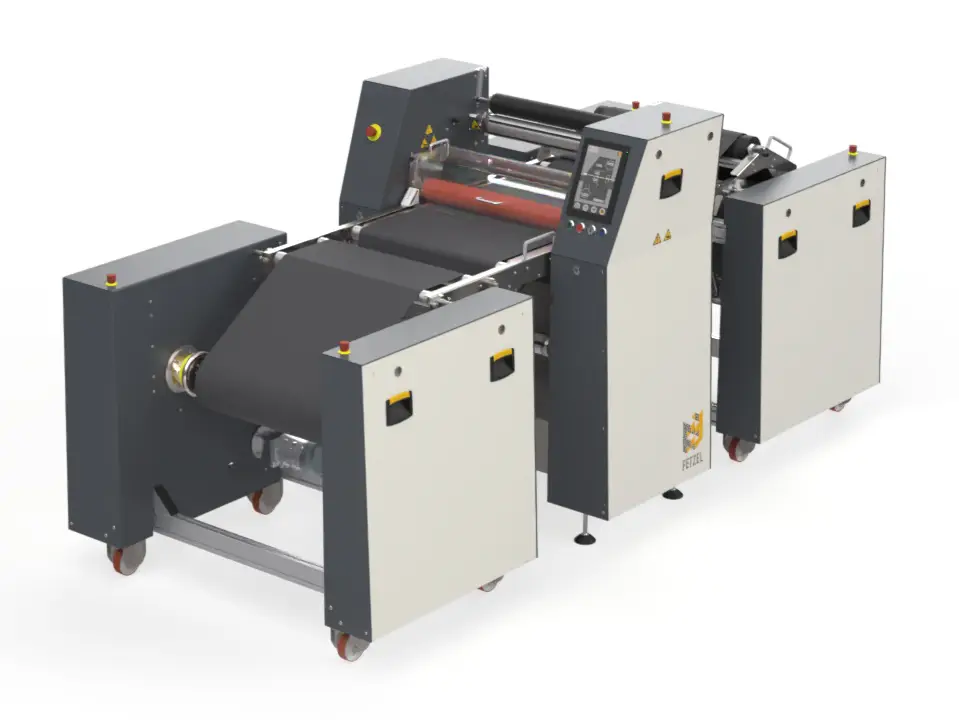
Laminators for your production

Our modular standard models create a reliable bond between two or more films on substrates. They:

  • produce a wrinkle- and bubble-free film bond, even on demanding substrates
  • require significantly less force and energy than conventional hot presses
  • provide process parameters such as temperature and film tension digitally and save reproducible recipes
  • keep value creation and process know-how within your company

Use an in-house roll laminator to control quality and pricing yourself. With fast throughput, long-term cost savings and precise process control, an in-house lamination process offers clear advantages.

Everything from a single source: standard models and custom machines developed and built in Austria, as well as consulting, feasibility studies and process development.


Icon Expand

Standard laminators

Industrial models in many widths — modular and expandable

Icon individuell

Custom machines

Custom solutions developed for your lamination process

Icon Machbarkeit

Feasibility checks

Testing your ideas and requirements in pilot trials

Icon Prozess

Process development

Developing the ideal lamination workflows for your operation

Film coating for a wide range of applications

Our laminating machines coat a broad range of ceramic and carbon-fibre components, as well as materials such as glass, sheet metal, silicon wafers and paper. We supply:

  • production companies in the automotive, electronics, energy technology and photovoltaics sectors
  • research institutions and laboratories
  • machine builders and companies in metrology and medical technology
  • companies in the sports and leisure sector, the packaging industry and signmaking

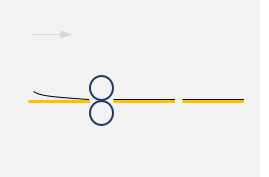
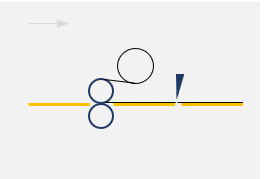
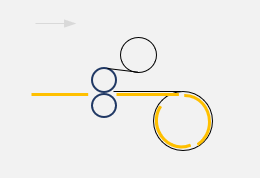
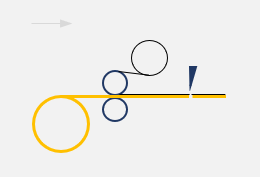
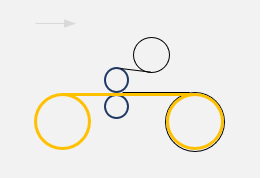
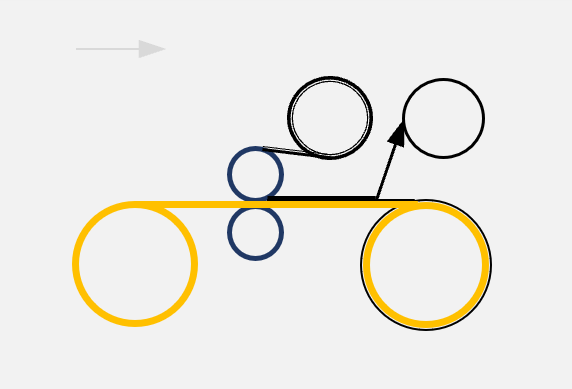
Depending on your requirements, we can supply our laminating machines for one of these six lamination principles:

Our models laminate ceramic or carbon-fibre components and materials such as glass, sheet metal, silicon wafers and paper, including in cleanroom environments. Typical coating applications include:

  • applying adhesion promoters to printed aluminium sheets and applying films to head-up displays
  • coating printed circuits, flat ribbon cables, touchscreens, keypads, flexible heating systems, skis and tattoo stickers
  • coating fuel cells, solar cells or RFID tags for access-control systems, as well as applying insulation layers in battery technology
  • coating rigid or flexible circuit boards for hearing implants or pacemakers, sensors, rotary encoders and other measuring instruments

Modular laminating machines

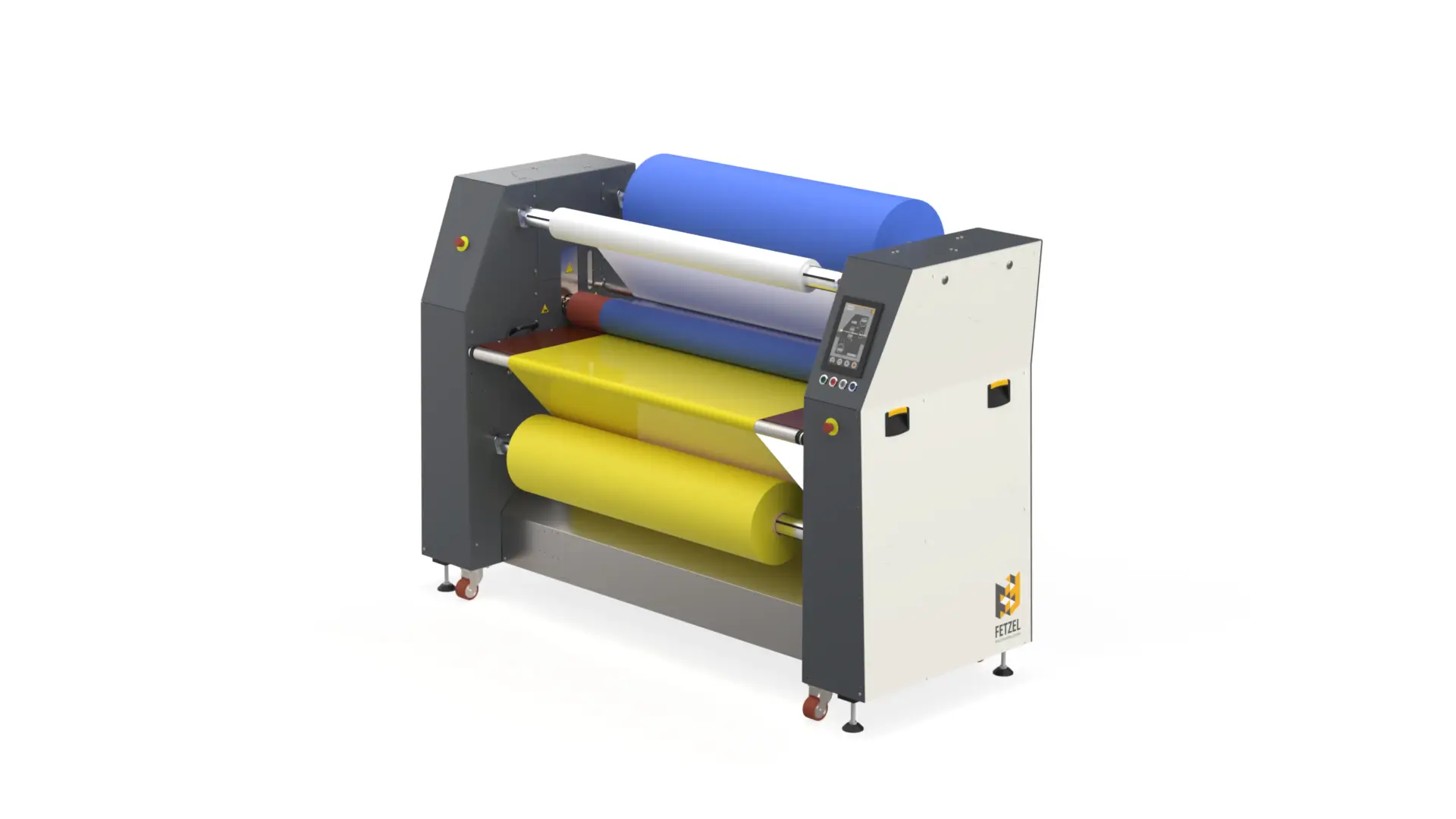
  • Individually configurable process parameters for pressure, temperature, tension, speed and roller gap/surface
  • An intuitive, easy-to-use touchscreen control panel
  • Integrated recipe management for saving settings
  • Fast, straightforward adaptation of functions when market or technology requirements change your products

Variable thicknesses, changing batch sizes? Our industrial laminators allow fine adjustments, for example to pressure, temperature, tension or roller gap. Invest now in upgradeable solutions with long-term security.

Standard models in modular design

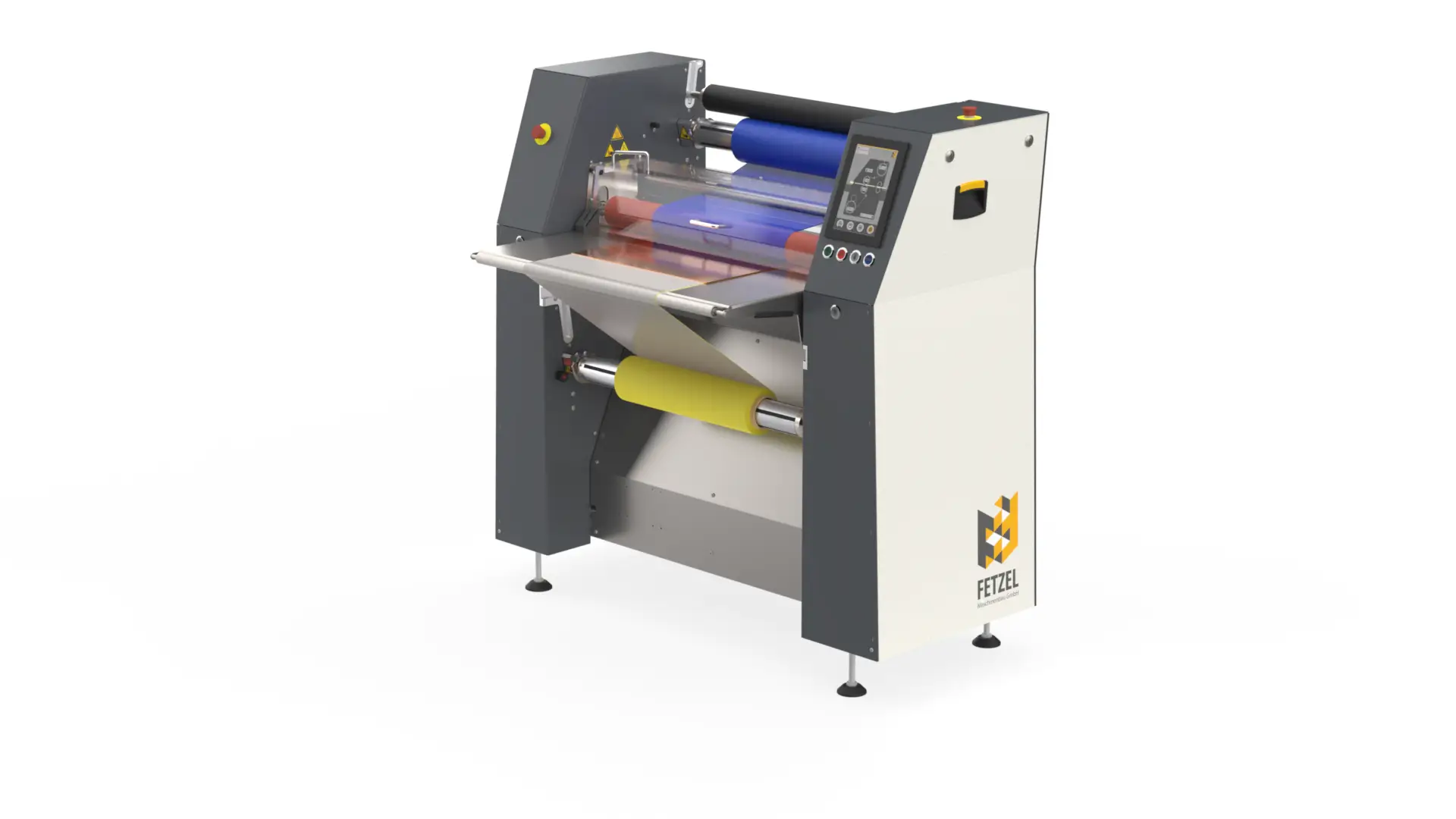
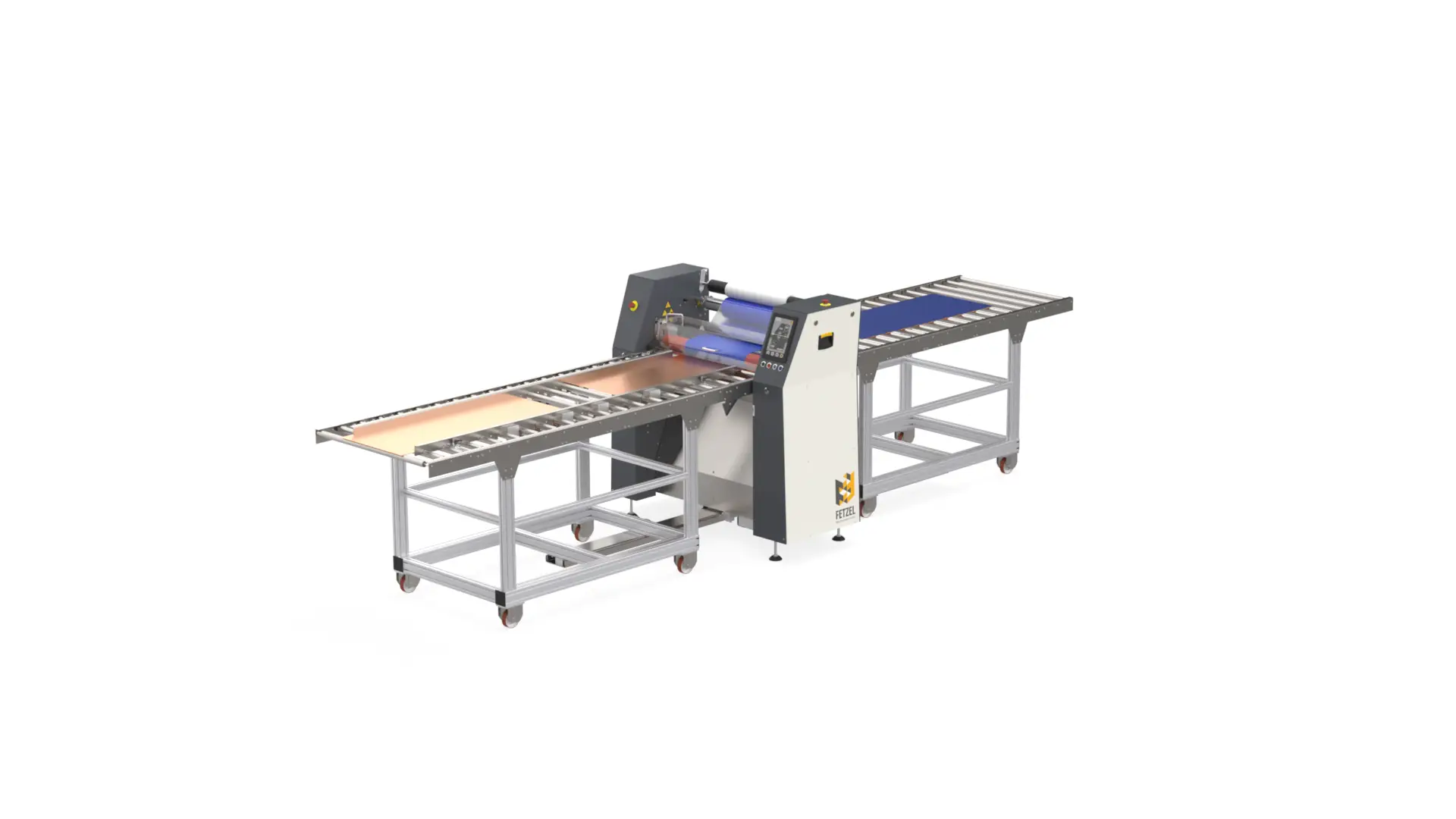
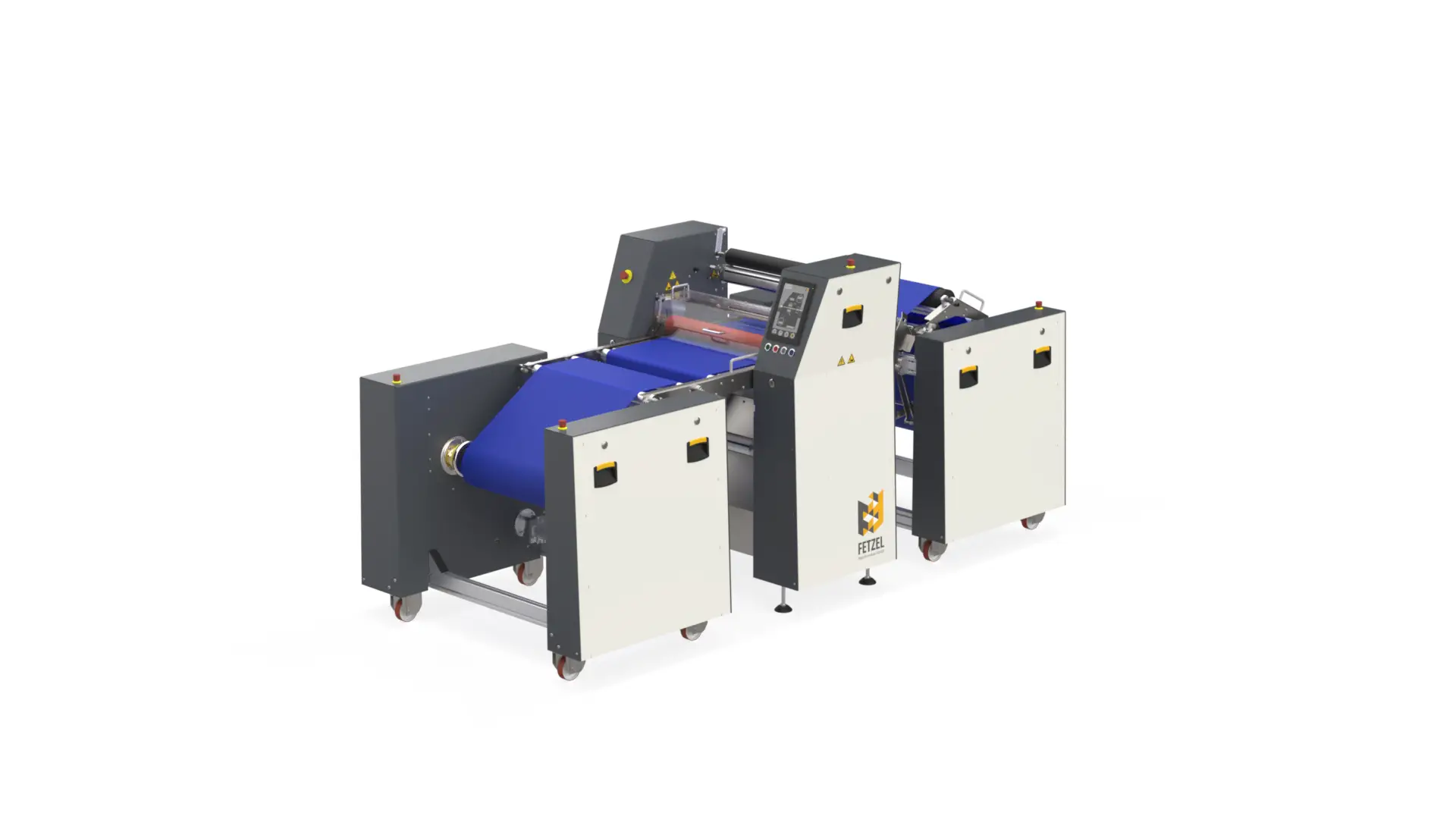
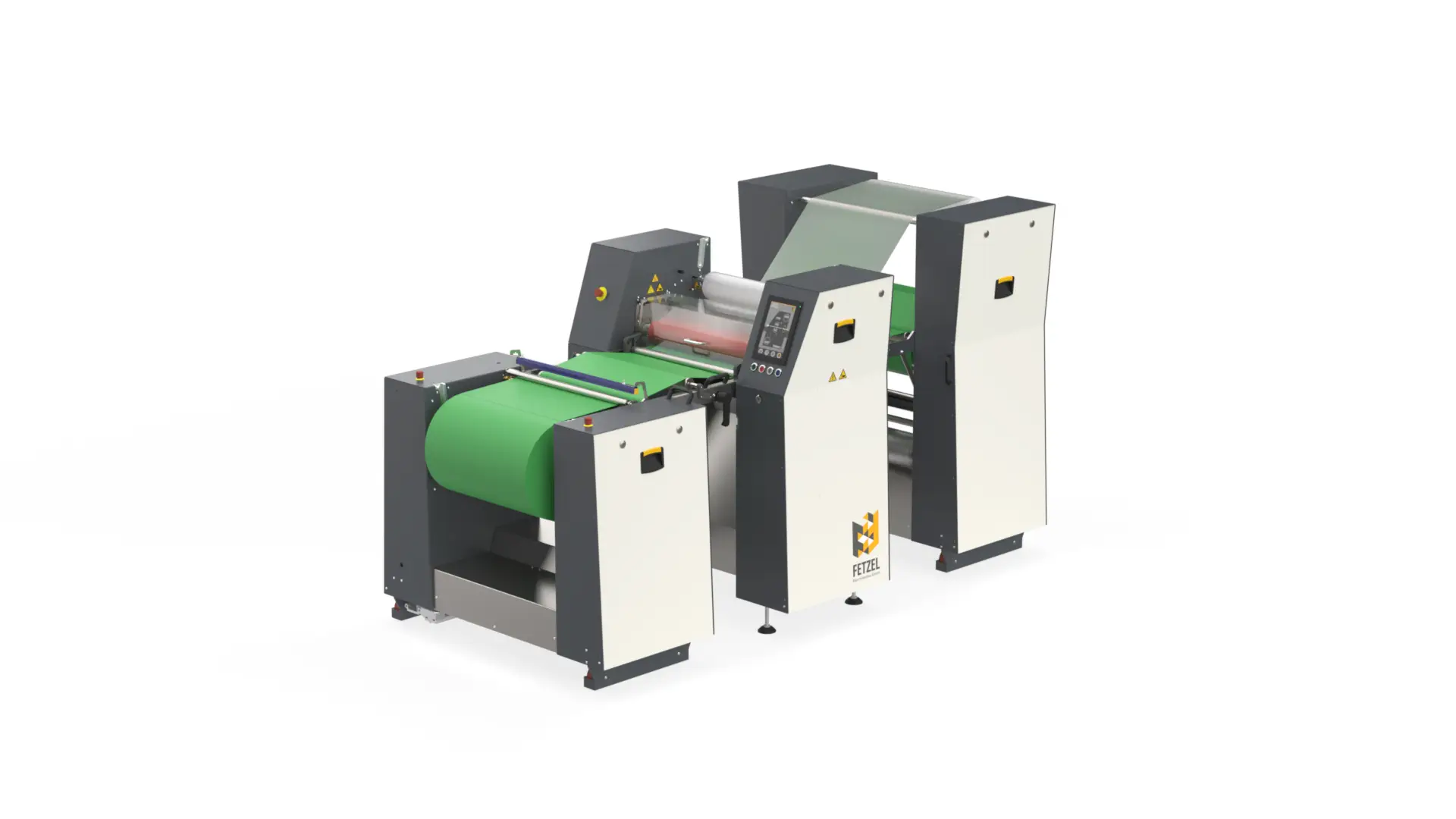
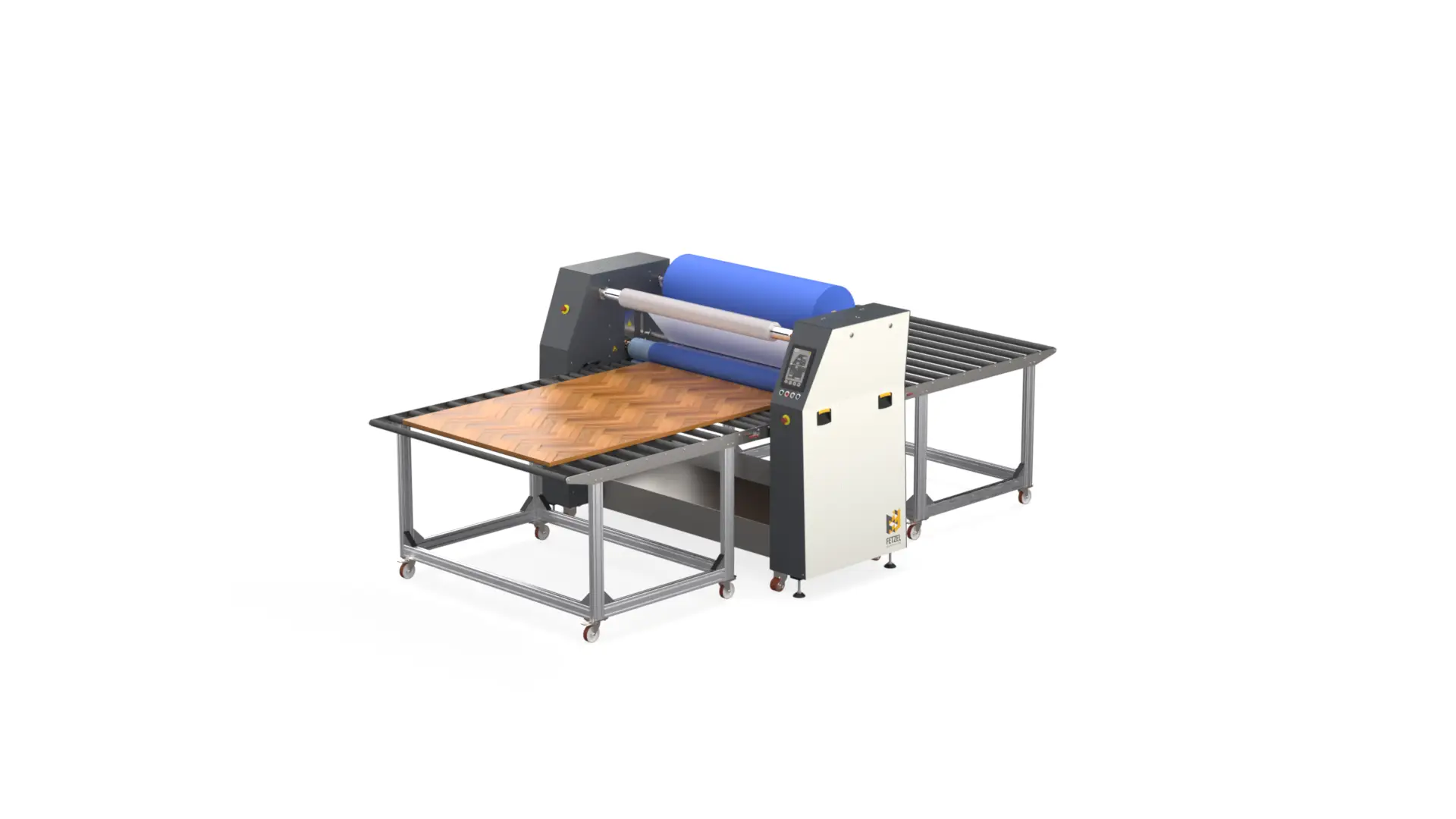
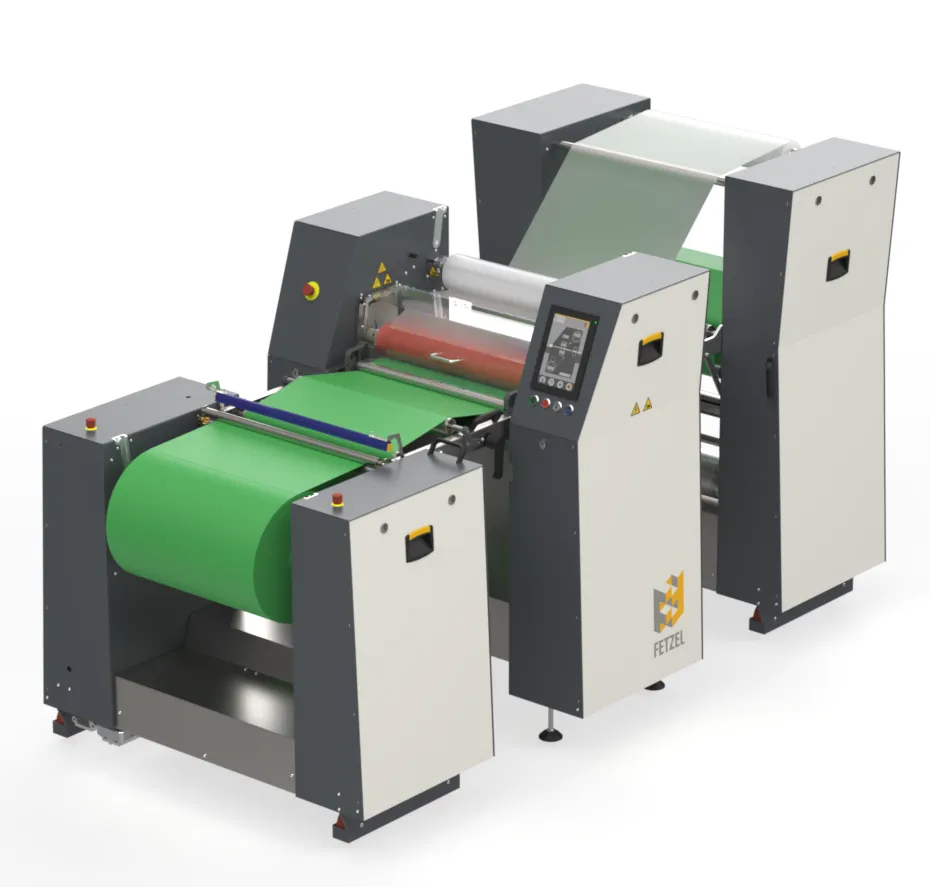
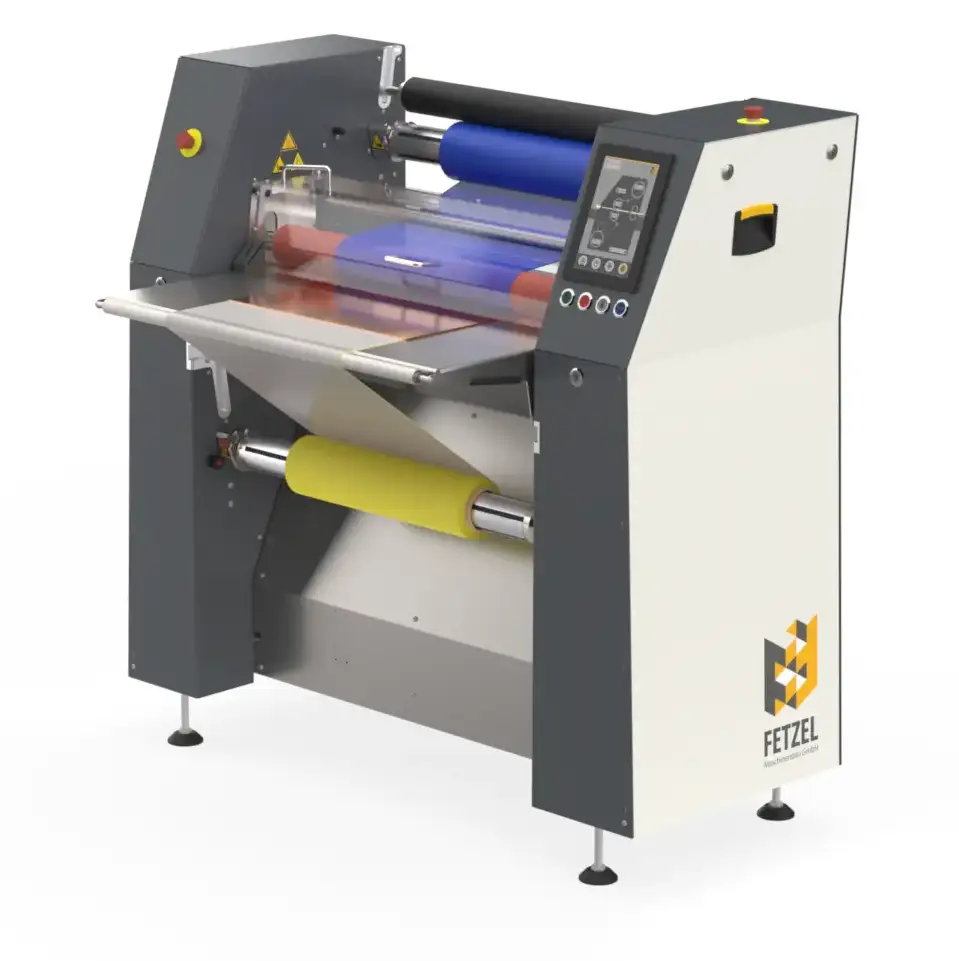
For single- or double-sided lamination of sheets, or for roll-fed lamination, we offer machines with an infeed and outfeed table as well as two unwinders. The lead time for standard models is usually 12 weeks.

Laminators in five working widths

Application range

Models

Working widths

Von sehr schmalen Laminiermaschinen bei wenig Platzbedarf bis zu universellen Breiten

From very narrow laminating machines for limited installation space through to universal working widths.

Flexible conductor films, fuel-cell membranes, silicon wafers, medical products, circuit boards, heating films, glass plates and other composite materials, touchscreens and membrane keypads

Material thicknesses: 0–30 mm

SDL40

400 mm

UVL60

600 mm

SOL80

800 mm

Extra-wide models

Additional applications: laminating printing plates, sheet metal, furniture panels and wide printed circuit boards.

Material thicknesses: 0–90 mm

UXL125

1 250 mm

UXL160

1 600 mm

One laminating system — many possibilities

Start today, expand tomorrow: you initially invest only in the hot or cold laminator configuration you currently need. Further modules from our range can simply be retrofitted later, for example when you want to process new products.

The well-designed modular system gives you maximum flexibility and helps avoid production downtime, additional engineering costs and expensive reinvestment. The open control architecture allows new functions and future extensions to be integrated.

Communication with upstream or downstream equipment is possible via digital or analogue interfaces: Profinet or OPC UA. The emergency-stop circuit can also be connected to surrounding systems.

  • Maximum lamination temperature: 200 °C
  • Substrate thicknesses: between 0 and 90 mm
  • Speed: 0.1–15 m/min, continuously adjustable
  • Energy consumption: 3 to 10 kW, depending on working width
  • Infeed and outfeed tables or unwinders and rewinders adapted to the process

We offer retrofittable standard models with scalable levels of automation — from manual to fully automated — and finely adjustable process parameters. Possible extensions include:

Infeed and outfeed tables

Choose whether your machine should be equipped with a standard or extra-long infeed and/or outfeed table. An intelligent infeed table automatically adjusts the spacing between the loaded materials and ensures a smooth process. Specify the laminating machine configuration that best fits your requirements.

Unwinders and rewinders

For especially efficient roll-to-roll lamination, we recommend using practical unwinders and rewinders. The unwinders for protective films have precisely adjustable pneumatic brakes. Controlled material tension ensures high product quality and a stable, efficient process — especially with flexible materials.

Cutting units

A travelling cross-cut system separates the film without interrupting the lamination process. Products fed into the machine are trimmed flush at the leading and trailing edges. At the same time, a double-knife unit cuts the film on both side edges, and the offcuts are reliably extracted. For additional flexibility, an integrated slitter precisely divides the film into several webs along the material-flow direction — ideal for end products of different widths.

Learn about the guillotine cutter

Custom laminator solutions

Do you have complex requirements, and the configuration options for the standard models are not enough? For example, do you need:

  • more contact force for materials, or particularly precise tension control for membranes, such as those used in fuel cells
  • simultaneous processing of different films in a single pass
  • an integrated slitting or cross-cutting option
  • exceptionally precise alignment between the laminating rollers
  • a laminating module to be installed in your machine

If there is no standard model for a particular application, we will develop a suitable machine for you. Request our configuration guide.

Industrial quality made in Austria

Fetzel Maschinenbau has been developing and producing industrial laminators in Vorarlberg, Austria, for more than 40 years. Every machine:

  • is built exclusively from high-quality components, preferably from European manufacturers
  • is designed for long-term, sustainable continuous operation
  • is supported by fast remote service
  • has spare parts available even decades later

Our service team is ready to provide expert assistance. You benefit from a reliable product lifecycle trusted by companies worldwide.

Insights

Logo ISO 9001 TRB

ISO 9001

We are proud to have received ISO 9001 certification. This internationally recognised certification confirms the high quality standards we maintain…

Mehr lesen über ISO 9001

Comprehensive services

Feasibility checks

Visit us and see first-hand how your substrates and films are processed on our machines in our technical centre. This gives you an immediate impression of the results.

Alternatively, send us your materials. We will carry out the tests for you, let you follow the trials live on request and then send you a sample.

Our service gives you a reliable indication of whether the desired configuration is suitable for your coating process. This helps you avoid failed trials, save time and money, and benefit from our expertise. Together, we find the right solution for your requirements — including questions such as:

  • Can the materials, components or products used be laminated?
  • Is a sufficient bond created between the materials?
  • Is it possible to laminate several films at the same time?
  • Can a roll laminator replace a press or hot-press process?

Developing lamination processes

Joining a flat workpiece with a film, or bringing two films together, may sound simple. In practice, however, the following questions arise:

  • Is it possible to carry out hot and cold lamination in a single process step?
  • How can a stable process be achieved without wrinkles or air bubbles?
  • What factors are limiting your lamination process?
  • How can the quality of the laminated product be ensured over the long term?
  • What options are there for increasing production speed?

We will be happy to work with you to develop the right lamination process for your operation. Benefit from our expertise and process support to achieve the quality you need quickly.

Comprehensive support

Drawing on more than 40 years of experience in machine manufacturing, we provide straightforward, expert support:

  • Easy remote maintenance: using a remote-maintenance gateway, we provide fast, efficient support directly at the machine. Our support team can see the screen, make software adjustments or install updates. Requirements: LAN or Wi-Fi connection.
  • Real-time data transfer: on request, we can set up an OPC UA connection to transfer live data from the machine to a control system. Data or recipes can also be sent from a higher-level control system.
  • 12-month warranty, extendable to 24 months (excluding wear parts)
  • Spare parts available for decades
  • Commissioning and training at our factory — or directly at your site on request
  • Flexible financing options on request

FAQ

A laminating machine has one fixed roller and one moving, spring-loaded roller that presses on the material with a defined contact force. The roller position adapts to the product. The machine is suitable for joining two materials with a defined force.

A calender also has two rollers. One is fixed, as in a laminator; the other can be set to a defined distance, but is not spring-loaded. The product adapts to the roller gap. The calender brings the workpiece to a defined thickness. Calendering usually involves higher forces than laminating.

Laminating means coating a product with one or two films. A wide range of products can be laminated, such as circuit boards, wafers, membranes, touchscreens, keypads, flexible electronics and graphic products such as documents, menus and similar items. The substrates perform technical or protective functions for the product.

Film lamination means coating a material with film applied on one side. This term is especially common in the graphic arts industry. The laminated printed products are protected on one side, for example book covers or packaging. Film lamination is usually used for visual finishing and surface protection. Very thin films made of OPP (oriented polypropylene) are used; these can have glossy, matt, structured or pleasant tactile finishes and are intended to make the product more durable and give it a more premium finish.

Cellophane lamination is an older term for film lamination. The term is still common in the printing industry. It dates back to the use of Cellophane, and the name has remained in use.

The distinction between these terms is not clear-cut. In technical contexts, applying a film on one side with a laminating machine is also referred to as laminating; in the graphic arts sector, it is referred to as film lamination or cellophane lamination.

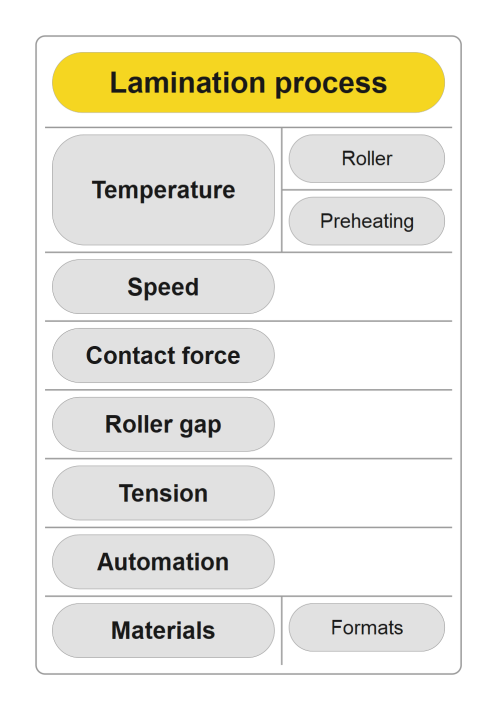
Important factors include contact force, speed, roller temperatures and additional heaters, roller gap, roller hardness and film tension.

The contact force creates sufficient pressure between the materials. The materials to be laminated are joined by an adhesive layer. This may be a cold adhesive, a self-adhesive film, an adhesion film or a thermally activated film. For thermal films, reliable temperature control is important for process stability. For some products, preheating can provide decisive advantages.

Speed and temperatures are strongly interdependent. The adjustable contact pressure of the rollers determines the lamination result. The roller gap protects the rollers when products are more than 1 mm thick.

The condition of the rollers is also important. It is important to have at least one flexible component, which is why rubberised rollers are usually used. A combination of one hard and one rubberised roller is also possible. Two hard rollers are used less frequently, for example when a very soft material is being processed.

Film tension is especially important for thin, stretchable films, such as membranes. Stiffer films are less sensitive, so the setting is less critical. The new generation of laminators has dynamic brakes that adjust the braking force according to the diameter of the film rolls. This means the film is always fed with the same tension, resulting in high process stability.

In thermal or hot lamination, a film is processed that is not adhesive at room temperature. A heated laminating roller or heated products activate the films; when exposed to the required temperature, they become tacky and bond with the product. The films can have two different sides, one with a high melting point and one with a low melting point, or they can have an adhesive layer applied on one side. Handling a thermal film is easier because it is not sticky when cold. Lamination speed is directly influenced by heat input and film thickness.

Cold lamination, by contrast, allows faster processing because no heat input is required. However, handling the film is more difficult because it is sticky even when cold.

Another option is to process adhesion films. Adhesion films have no adhesive layer and adhere to the product by adhesion alone. This works only when the product is smooth, such as a sheet-metal panel or glass plate. Films of this type are generally used for temporary product protection and later removed again.

Rubberised rollers with a hardness of 60–70 Shore A are suitable for most applications. If a film needs to be pressed into the structure of a product, softer rubber coatings are required. These create a larger contact patch on the roller, which improves heat transfer and requires less contact force.

Hard rollers are used for soft products. Hard, very smooth rollers enable lamination of visually demanding product surfaces, such as gloss films in the graphic arts industry. In this case, one hard roller and one rubberised roller are combined.

Roller-gap adjustment is used mainly as a preset for products thicker than 1 mm, preventing damage to the roller surface. Depending on the hardness of the roller rubber, the roller gap is set approximately 0.5–2 mm smaller than the product thickness.

Another use case for roller-gap adjustment is soft products such as foams. As a rule, these should not be fully compressed during lamination. With roller-gap adjustment, the material is compressed only to the exact set value.

Find a dealer

Logo Sense Advanced Technology

SAT Electronic GmbH
Gewerbestraße 4
83043 Bad Aibling
Germany
+49 8061 3506 0
sales@sat.eu
www.sat.eu